
A terminal pull-off test measures the force needed to separate a crimped connection. Identify the terminal, wire and test procedure before selecting the fixture and instrument.
Describe the terminal geometry, dimensions and wire size in mm² or AWG. Share the expected force and unit, required test standard and revision, and any acceptance criteria your customer specifies.
Review whether the terminal body can be retained without deformation and whether the opposing grip can hold the conductor on the pull axis. Confirm the actual fixture and test configuration for your specimen before ordering.
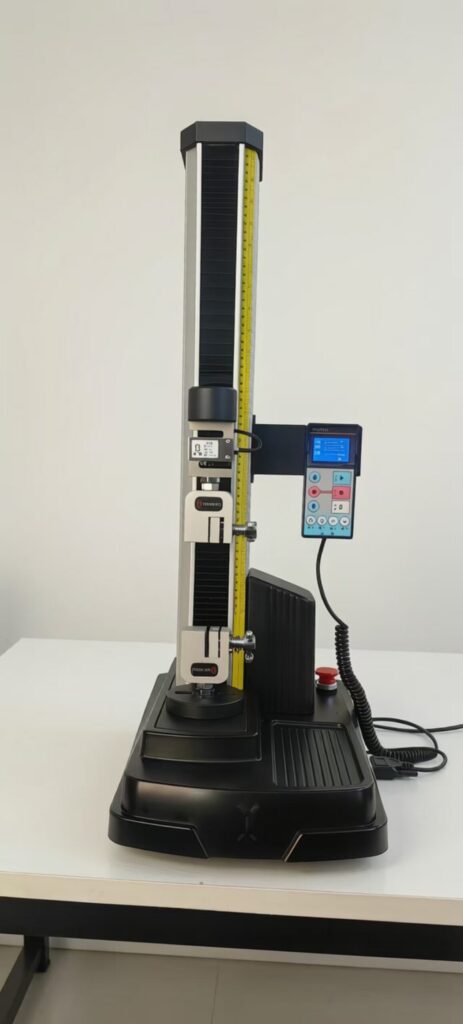
View the wire crimp pull tester or discuss your terminal sample.
Match the fixture to the connection
For a ring terminal, send the hole diameter and a side view showing clearance around the barrel. For an open fork or another terminal without a closed hole, show the surface the holder can retain. Include a dimension or scale in the photo. A holder that fits one terminal may load another at an angle.

Tell us how the result will be judged
If your procedure calls for pulling to failure, share the required speed and how the failure location should be recorded. For a proof-load test, share the required load and hold time. Include the standard number and edition or a customer drawing so the engineer can check the requested configuration.